For most Muslims, the Quran stands at the very center of life.
And yet, for many, its language remains distant, accessed primarily through translation.
While translations are valuable, they can never fully transmit the precision, rhythm, and layered meaning embedded in the Arabic language itself. The Quran was revealed in Arabic, and it is meant to be read and recited in Arabic.
This first lesson of Arabic Accelerator is designed to realign your approach from the very beginning.
Before grammar charts, before vocabulary lists, before complexity, you must first become familiar with the building blocks of the language.
This lesson is a complete beginner’s guide to the Arabic alphabet, pronunciation, and basic letter writing, designed for students who want to learn Arabic from scratch with accuracy and structure.
It is especially suited for those learning Quranic Arabic, adult beginners, and anyone who wants to move beyond translation and transliteration toward direct engagement with the Arabic language itself.
Welcome to Module 1, Lesson 1 of Arabic Accelerator .
Why Learning Arabic Requires a Different Approach
Arabic is not difficult because it is “exotic” or “foreign.”
It is demanding because it is precise.
Arabic letters are:
- Phonetic: each letter corresponds to a sound
- Contextual: their shape changes depending on position
- Physically articulated: many sounds are produced deep in the throat or back of the mouth
If pronunciation is approximated, comprehension collapses later.
If letter shapes are misunderstood, reading becomes guesswork.
This is why we start here.
Slowly, deliberately, and methodically.
Understanding Arabic Letters & Their Structure
Arabic consists of 28 primary letters, but treating them as a flat list is a mistake.
Each letter must be understood through three dimensions:
Its sound (makhraj – point of articulation)
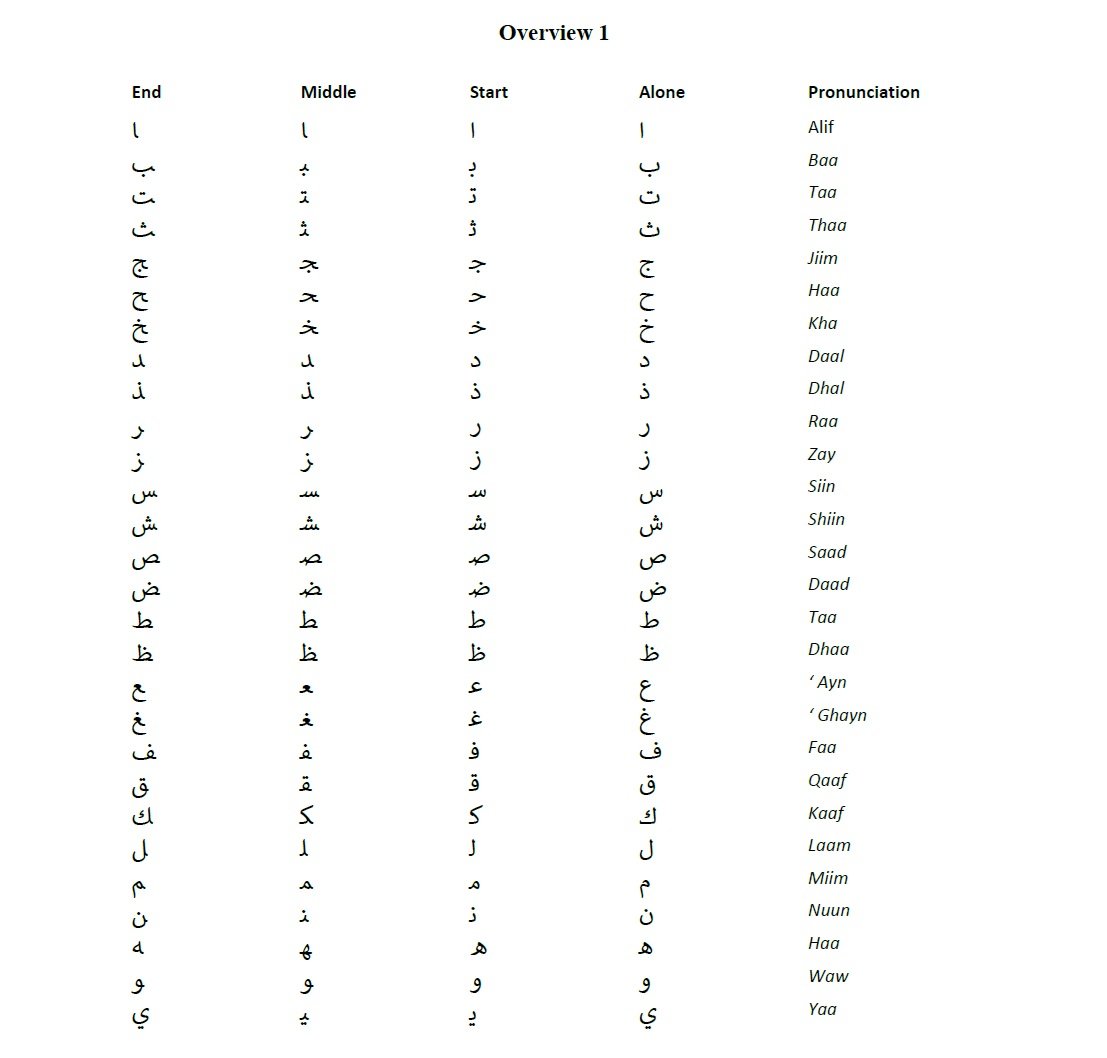
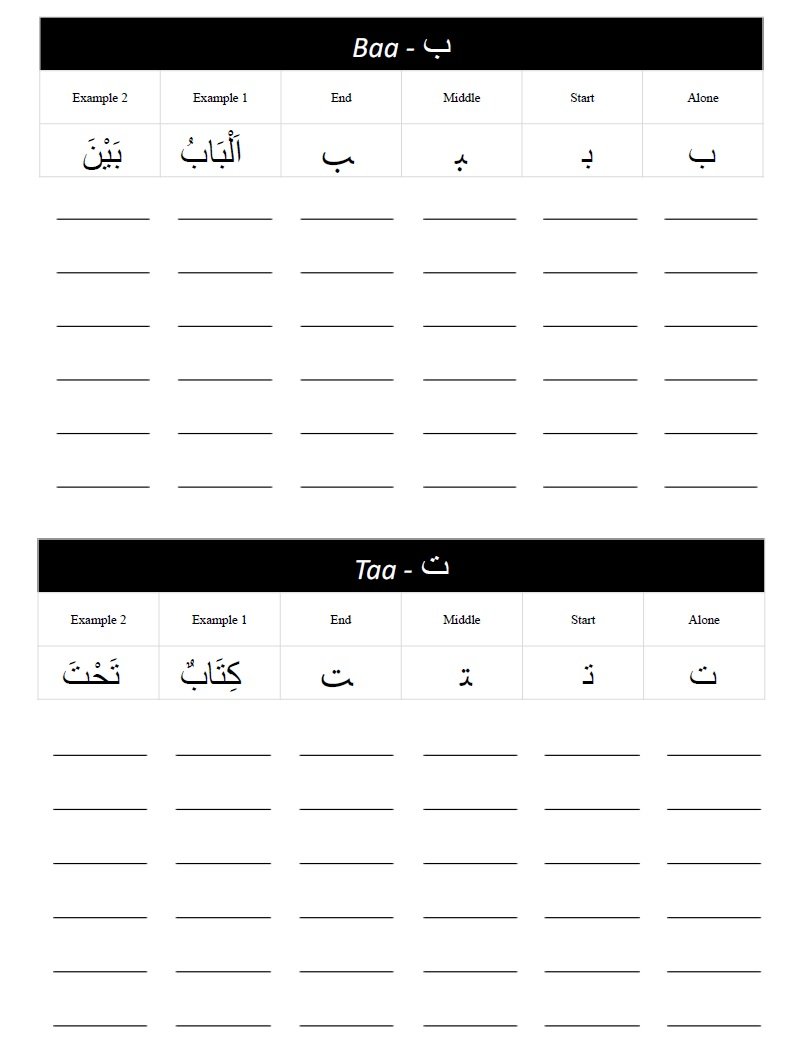
Its written forms (isolated, beginning, middle, end)
Its interaction with vowels and neighboring letters
This lesson focuses primarily on dimensions 1 and 2, with controlled exposure to the third.
Grouping Arabic Letters by Shape and Form
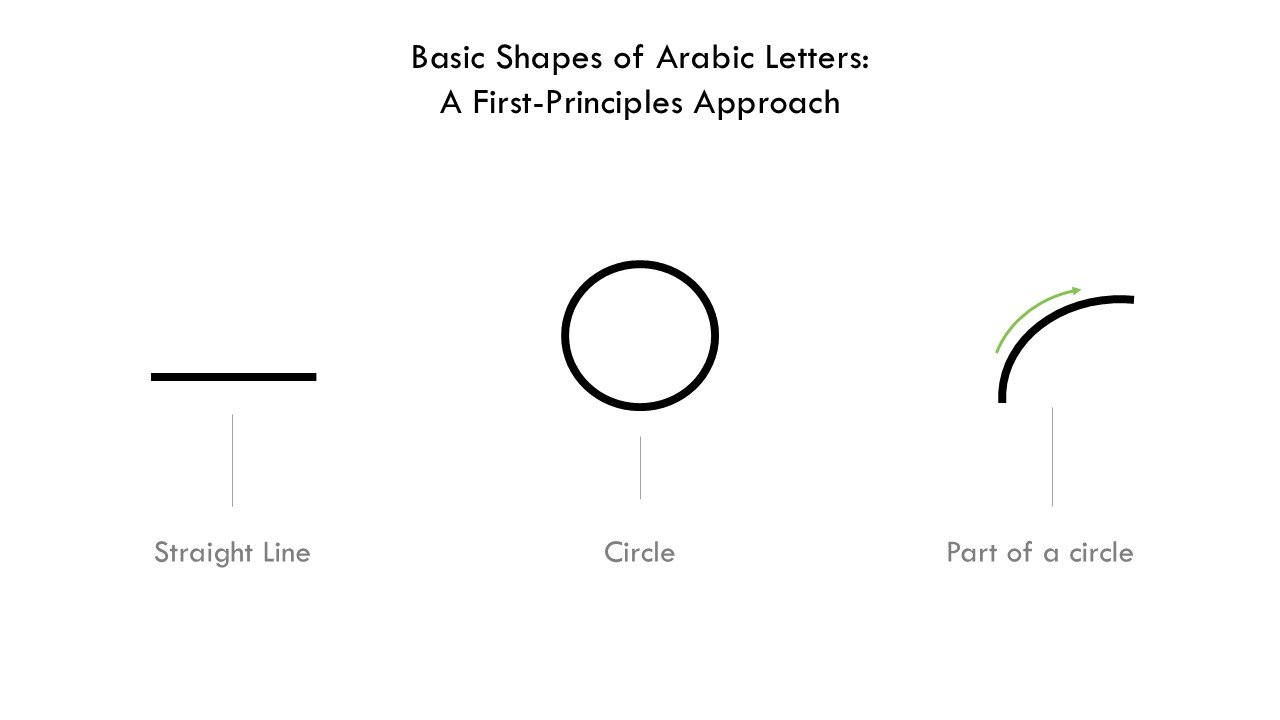
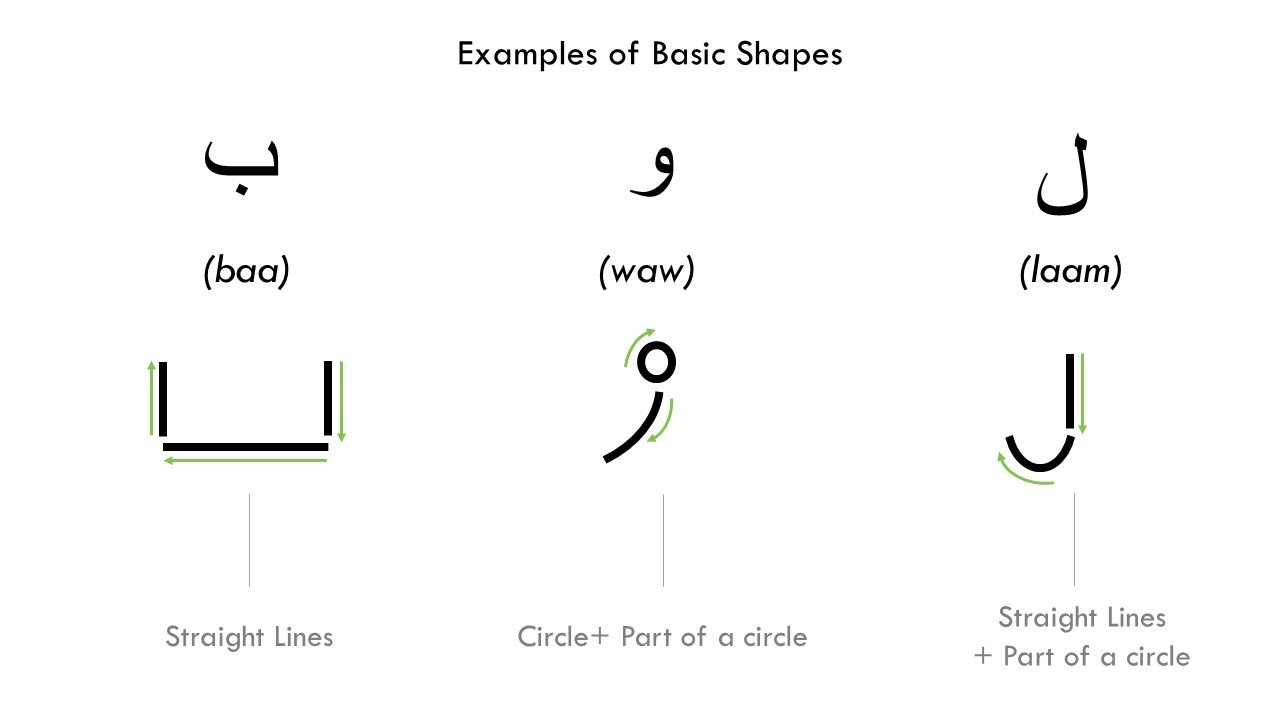
Every Arabic letter can be constructed from one of three basic shapes: a straight line, a full curve, or part of a curve.
Rather than memorizing letters in alphabetical order, this lesson groups them according to their underlying form.
Letters that share the same structural shape are learned together, even if they represent different sounds.
This approach makes the script intelligible. Instead of seeing each letter as a new symbol, you begin to recognize how Arabic letters are built, modified, and extended from the same basic components.
By understanding that all Arabic letters emerge from a limited set of simple shapes, writing becomes more controlled, reading becomes more fluid, and memorization becomes significantly easier.
Arabic Letter Shapes & Positional Forms
Unlike Latin scripts, Arabic letters change shape depending on where they appear in a word:
Isolated (standing alone)
Initial (at the beginning)
Medial (in the middle)
Final (at the end)
Some letters connect on both sides, others only on one side, and a few do not connect at all.
Rather than memorizing this abstractly, the exercises guide you through:
Visual repetition
Handwriting practice
Pattern recognition
Writing is not an aesthetic exercise here, it is a cognitive reinforcement tool.
Arabic Pronunciation for Beginners
Several Arabic sounds do not exist in English or French:
ʿAyn (ع)
Ḥāʼ (ح)
Khāʼ (خ)
Ṣād (ص)
Ḍād (ض)
Ṭāʼ (ط)
Ẓāʼ (ظ)
Ghayn (غ)
These sounds are trained physically, not intellectually.
This is why the lesson includes dedicated MP3 pronunciation tracks, where you:
Listen first
Repeat consciously
Compare your sound to the reference
Re-listen with intention
There is no shortcut here, only controlled repetition.
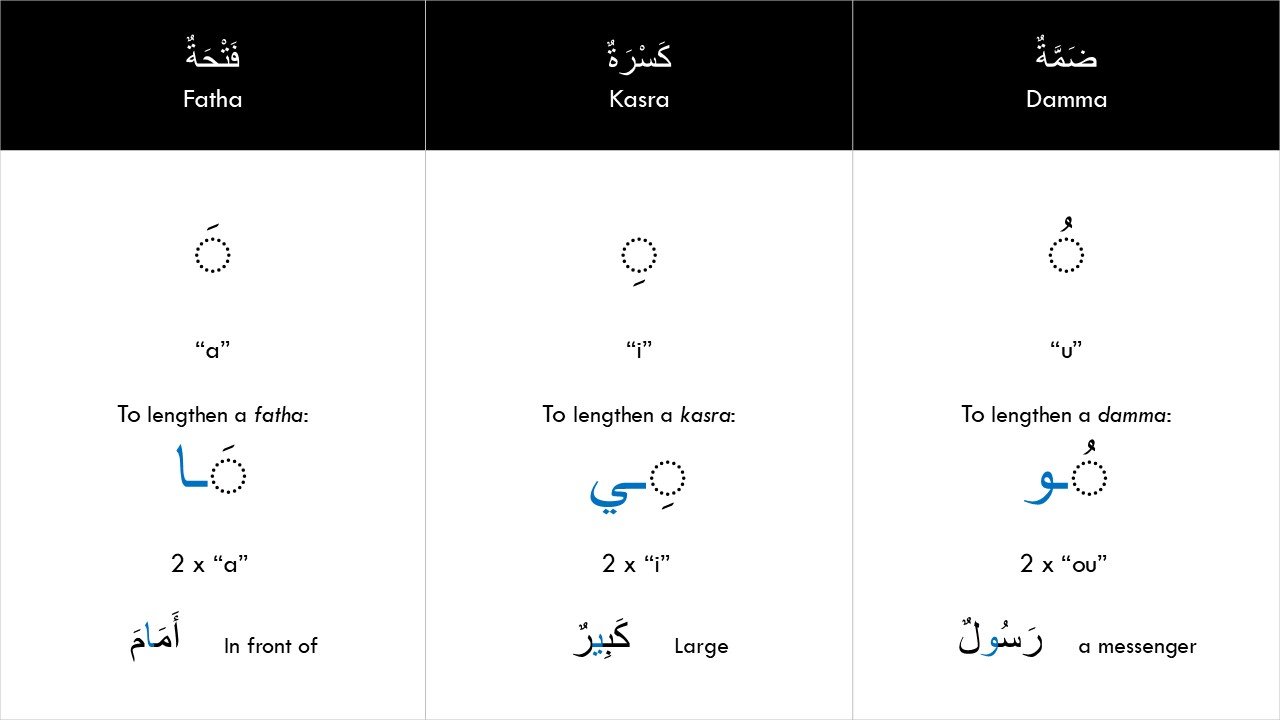
Arabic Vowels Explained: Short Vowels, Long Vowels, and No Vowel
Arabic meaning is heavily dependent on vowel length and presence.
In this lesson, you are introduced to:
Short vowels (fatḥa, ḍamma, kasra)
Long vowels (ā, ū, ī)
Consonants without vowels
At this stage, the goal is not fluency, but awareness.
You are training your ear to distinguish:
Length vs brevity
Movement vs stillness
Sound vs silence
These distinctions will later determine meaning.
Arabic Writing Practice: Building Muscle Memory
The downloadable exercises include full writing drills for every letter:
This is not “optional.”
Writing forces you to:
Slow down
Observe proportions
Internalize directionality
Reinforce visual memory
You are not learning calligraphy, you are learning structural literacy.
How to Use This Lesson Properly
To extract maximum value from this lesson:
Watch the video lesson first
Download the exercises and MP3 files
Practice pronunciation with the audio tracks
Write every letter, even if it feels repetitive
Return to the video for comparison and correction
Progress in Arabic is not linear, it is layered.
How Arabic Accelerator ⚡ Makes the Leap Possible
If you’ve read this far, it means something inside you is pulling you toward the Quran.
At Arabic Accelerator, we’ve built a complete learning system that guides you step-by-step through the structure of the Arabic language.
This structured system takes you from the very first steps all the way to starting to understand the Quran with depth and clarity.
No matter your level, it bridges the gap between where you are today and the Quran in its original language.
That’s how the journey begins. Take the first step, in shā’ Allāh.
FAQ: Common Questions About Learning Quranic Arabic
Learning Quranic Arabic is a lifelong journey. There will always be more depth to uncover in the Book of Allah. Even scholars continue to learn throughout their lives.
But here’s the good news: if you focus your efforts directly on Qur’anic Arabic, you will begin to experience progress and spiritual connection from the very first lessons. You don’t need to wait years before you taste results.
In Arabic Accelerator, students are immersed in the Quran from Lesson 1. Each lesson ends with several Quranic verses where the rules are applied, step by step. The verses are not only analyzed grammatically, they are also recited melodiously, allowing you to tune your ear to the beauty of Revelation while understanding how the language works.
This means that while you are learning grammar, vocabulary, and structure, you are at the same time building a direct link with the Quran.
So while full mastery is a lifelong journey, with consistent effort you will begin to recognize words, patterns, and meanings in the Quran within months. More importantly, you’ll feel your heart connecting with Allah’s words in a way that translations can never provide.
No. If your goal is to access the Quran, you should begin directly with Quranic Arabic. Modern Standard Arabic (MSA) is useful for newspapers, media, and formal writing, but it is not the language of Revelation. Many students waste years on MSA, only to realize later that it hasn’t brought them closer to understanding Allah’s words.
In Arabic Accelerator, we cut through this confusion. From day one, you are immersed in Quranic Arabic itself. Learning the rules, vocabulary, and structures in the exact context you need: the Quran. This way, your energy goes straight into your ultimate goal, without detours.
👉 For a deeper look, see our blog: Which Arabic Should You Learn First?
That’s not a problem at all. You can start from zero. In fact, many of our students begin without knowing how to read Arabic.
The first lesson of the program is located at the top of this page, and is focuised on the alphabet, diacritics, and pronunciation. You’ll learn not only how to recognize the letters, but also how to pronounce them correctly, both vocalized and unvocalized. The lesson includes also practice exercises and audio recitations to train your ear.
👉 Scroll up to watch the lesson and begin your learning journey, no matter your starting point.
Not if you approach it in the right way. Many people assume Arabic is hard for adults, but that’s simply not true. Adults actually have an advantage: They can understand structure, patterns, and logical explanations in ways that children cannot.
The real challenge is not age, it’s approach. If you study haphazardly, jumping between apps and unstructured resources, you’ll quickly get discouraged. But with a clear, step-by-step program that gradually builds your knowledge and applies it to the Quran, you’ll progress steadily.
In Arabic Accelerator, adults of all ages succeed because each lesson is designed to build confidence and clarity, not overwhelm.
The Qur’an itself becomes your guide, and every verse you unlock motivates you to keep going.
Motivation doesn’t last forever. Discipline and intention are what carry you. The best way to stay motivated in learning Quranic Arabic is to constantly reconnect to your why. In other words, your desire to understand the words of Allah directly.
In practical terms, motivation grows when you:
Anchor your intention sincerely
Protect fixed study times in your schedule
Surround yourself with a supportive community
See small wins consistently, like understanding a word or structure in a verse you hear in prayer
Arabic Accelerator is built with this in mind. Every lesson ends with Quranic verses, so you’re not just learning abstract rules, you’re immediately tasting the sweetness of understanding Revelation. This constant connection with the Qur’an fuels your motivation and turns study into worship.